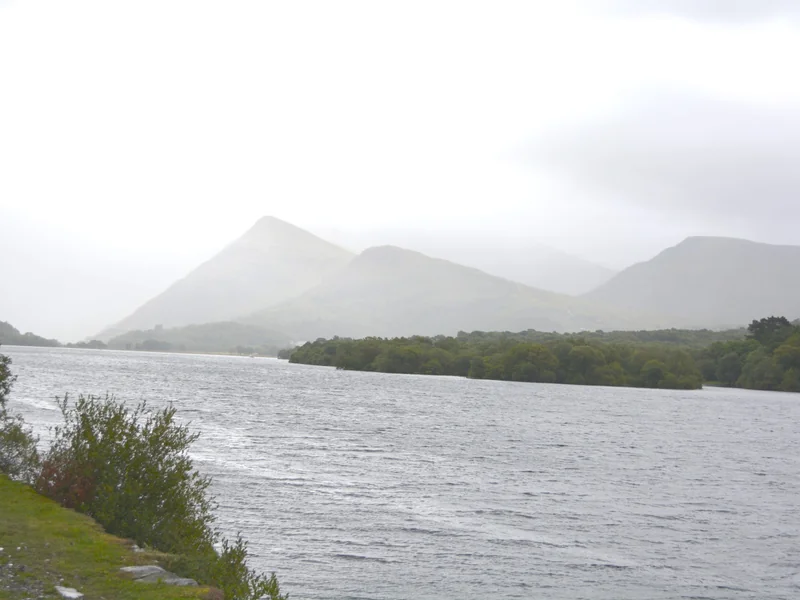
A Carp Fishing Guide to Tar Farm Lake 8
Linear Fisheries Oxfordshire, UK intermediate
Tar Farm Lake 8
Linear Fisheries
Oxfordshire
UK
intermediate
21 min read
This guide serves as a strategic document for successfully targeting carp at Tar Farm Lake 8, the smallest and most exclusive of the five bookable lakes on Linear Fisheries’ Tar Farm complex near Witney, Oxfordshire. Opened in 2022 and stocked with a deliberately low head of large, fast-growing carp, Lake 8 has quickly earned a reputation as a “freak of nature” water where the average fish is now in the thirties and the biggest resident has passed 50 lbs. It is a very different proposition to the busy main-site waters like Brasenose 1: quieter, deeper, pre-booked, and technically demanding. This guide covers pre-arrival intelligence, the unique depth profile, environmental dynamics, equipment, the dominant zig and solid bag tactics, baiting philosophy, peg selection, and rig mechanics, providing a complete framework for a successful session.
This section focuses on all information that can be gathered remotely before setting foot on the bank.
Contact Information: All up-to-date contact details, bailiff numbers, and the current rulebook are on the official Linear Fisheries website. The complex is managed by Linear’s bailiff team, who patrol Tar Farm as they do the main site.
Booking & Access: This is the single most important difference from the rest of Linear. Tar Farm cannot be fished on a turn-up-and-pay basis. Every peg must be pre-booked through the Go Catch platform or app, and you can book individual pegs or, subject to availability, the whole lake. Key points noted from angler reports:
Rules & Regulations: Tar Farm operates under the main Linear Fisheries rules. Points of particular relevance to Lake 8:
Facilities & Security: Most pegs on Lake 8 allow you to park your vehicle directly behind the swim, so a barrow is rarely needed. Toilets and showers are available on the complex, mobile signal is good, and Linear’s on-site food service will deliver hot food, including Thai dishes, burgers, and fish and chips, directly to your swim.
Stock Profile: Lake 8 was stocked in 2022 on a different philosophy to the other Tar Farm waters. Rather than filling it with numbers, Linear stocked fewer fish with a much bigger average size, with the stated aim of creating “a real big fish water for years to come.” Official figures at stocking were:
Growth Rates: The headline story of Lake 8 is the growth. The fish are young, pellet-reared, and living in a deep, clean, food-rich pit. Angler intelligence from winter sessions reports catches of 20-plus fish where the average weight was mid-thirties, with fish to 41 lbs and 44 lbs 8 oz. Regulars describe “an immense head of fish between 33 and 39 lbs” and a small group of good forties.
Named Residents & Records: The lake record has moved rapidly:
Commons vs Mirrors: The stock is heavily mirror-dominated, with many stunning scaly and fully scaled fish. Commons are present but noticeably fewer, and a common of any size is a notable capture.
Other Species: Pike to mid-twenties, perch to 3.5 lbs, roach, rudd, and small tench and crucians seeded for the future. Crayfish are present in the wider complex.
Lake Map Analysis: Lake 8 is a compact water of around 8 acres with just eight pegs. Six pegs sit along one bank, with pegs 7 and 8 close together on the opposite side. Linear publishes depth contour maps in feet and metres for every Tar Farm lake on its website, and the pegs are laid out to line up with the far bank. Print the map before you travel; it will save you an hour of leading around.
Depth: This is not a typical gravel pit. Lake 8 is extremely deep for its size. Angler soundings report:
Key Features:
This section concerns the interpretation of conditions on the bank.
Wind Dynamics: The carp on Lake 8 follow the wind, and because the lake is small the response is fast. Regulars observe that a change in wind direction overnight will move fish from one end to the other by morning. On a compact water like this you are never far from the fish, and a wind-swap during a 24-hour booking is a signal to change something rather than sit on your hands.
Temperature & Depth: The depth of the lake is the dominant factor in fish behaviour. In warm, bright, calm conditions the carp spend long periods suspended high in the water column over 20 ft of water, often well away from the bottom. In cooler or overcast weather, and as the sun drops in the evening, they tend to come off the margins and drop down onto the deeper feeding areas.
Sunlight: In hot summer weather the fish stack up in the sunny shallower margins and the shallow end, basking and cruising in packs of five or six. Anglers with polarised glasses have counted 20-plus carp in the edge from a gap in the bushes. When the sun goes down they move out and down.
Aquatic Vegetation: There is a fringe of marginal weed and occasional weed on the bars, enough to catch a lead and to make an 11 lb-plus zig hooklink a sensible minimum. The main feeding plateaus are generally clean.
Natural Larder & Indicators:
Nuisance Wildlife: Wasps can be a real problem in high summer in some swims, and the bailiffs will treat nests on request.
This section details the specific tackle required to effectively fish the venue.
Casting Demands: Lake 8 is a short to medium range water. Most spots are between 13 and 22 wraps (roughly 50 to 90 yards), and the margins produce heavily, so extreme distance is not required. Standard 12 ft rods of 3 lb to 3.5 lb test curve are ideal. Softer rods are an advantage when playing fish on long zigs, where hook holds can be delicate.
Mainline Choice: A 12 lb to 15 lb monofilament is the norm. Several anglers fish a mono mainline with a braided shock leader for hitting the clip cleanly, while others use 15 lb mono straight through. Leadcore is not banned, but if you cast zigs with a leadcore leader use a PVA nugget to separate the hooklink in flight.
Zig Line: An 11 lb zig line or hooklink is the recommended minimum, giving enough backbone to bully a fish through marginal weed or over a clay bar. Many anglers scale lighter, but with fish to 50 lbs in 25 ft of water that is a risk.
Marker Rod: Essential on this lake. With depths swinging from 9 ft to 28 ft within a single cast, finding the plateau is the difference between fishing and not fishing. Count the float up from the lead and remember to allow for the length of the boom.
Wrap Sticks: Every spot on Lake 8 is a precise distance on a specific far-bank marker, and regulars mark their swim with wrap counts to the nearest foot. Sticks set a rod-length apart are indispensable.
Spod/Spomb Rod: Required for baiting the deeper plateaus. Remember the Spomb float rule. When spodding into deep water, reduce the spod distance by roughly one foot for every three to four feet of depth to allow for the rig swinging back on the drop.
Polarised Glasses & Optics: The clear water and basking summer fish make polarised glasses a genuine tool for finding fish in the edge and choosing where to bait.
This is the core of the angling approach.
Lake 8 rewards adaptability more than any single method. The consistent theme in every successful account is the willingness to change tactics the moment the fish show what they are doing.
Zigs: Zigs are the number one method on Lake 8 from spring through to early autumn, and several anglers describe them as “king” on their sessions. With 16 to 25 ft of water, the carp spend long periods in the upper and middle layers where bottom baits cannot reach them. Notable patterns from angler reports:
Solid PVA Bags: The stealth opener. Arriving quietly and dropping a couple of small solid bags onto fizzing fish accounted for two quick bites, including a 29 lb fish, on a session that otherwise went quiet for 36 hours. Solid bags fished tight to a margin tree in Swim 1 also produced the 51 lb 13 oz lake record along with three twenties and a thirty. Add liquids and oils to the bag so that attraction rises through the deep water column.
Bait and Wait on the Plateaus: The big-fish method. Find a 13 to 17 ft plateau, bait it with a spod mix of pellet, corn, hemp, and boilies, and fish all three rods on or around it. On the right conditions this produces rapid flurries: one angler landed six fish in a single morning over a 15 to 17 ft plateau at 80 yards, culminating in a 35 lb 12 oz mirror, after a night of nothing.
Margin Fishing: Do not ignore the edges. Peg 1’s 9 ft marginal shelf, fished with combi rigs and yellow baits over a hand-baited bed of pellet and boilie, produced several fish including a 25 lb mirror on a summer session. The lake record came from tight to a marginal tree in the same peg.
Surface Fishing: In hot weather the fish will show interest in floaters, but reports describe them as difficult to feed confidently on the top. It is worth a try when they are basking, but it is not a banker.
Watch the Water, Then Act: The single most repeated lesson from Lake 8 is to react. Several anglers spent hours baiting perfect spots, then caught only when they wound in and cast zigs at showing fish. As one put it, “if we would have stayed on the bait would we have had bites? Probably not.”
Stealth First, Then Build: Turn up quietly. Do not thrash the water to a foam with a marker float if fish are fizzing in front of you. Nick a bite or two on solid bags, then find and bait your spots once the initial activity has passed.
Bait for the Deep Water: In 16 ft-plus of water the fish are swimming a long way above your bait. Regulars use a decent bed of bait, in the region of 2 to 3 kg of mixed particle and boilie, specifically to draw fish down from the layers. Spread rather than pinpoint accuracy has been credited with multiple-fish mornings, as fish grazing over a wider area seem to feed more confidently.
Top Up After Every Fish: Once a flurry starts, get the rod straight back out with a few Spombs over the top. Bites on Lake 8 come in distinct feeding spells, often mid-morning, and the anglers who monopolise those spells are the ones who are organised and ready.
Do Not Ignore the Day: Unlike many Linear waters, Lake 8 is predominantly a daytime and morning water, at least in spring and summer. Do not assume a quiet night means a quiet session.
Pellet is King: Every fish in Tar Farm was reared on pellet, and pellet is described by regulars as “the least used bait I see” on the complex. A base of 6 mm to 8 mm coarse or fish-farm pellets, with some 4 mm bug pellets and liquids, is the most reliable food signal you can put in.
The Linear Particle Mix: Sweetcorn, hemp, and a scattering of 10 mm to 16 mm boilies. Corn is a near-universal ingredient in successful spod mixes here and the fish are widely reported to respond to yellow. Chopped worm added to the mix has produced multiple-fish mornings.
Hookbaits:
This section analyses the impact of other anglers and how to use it to your advantage.
Lake 8 is a different world from the main Linear site. With only eight pegs and every one pre-booked, there is no queuing, no buckets in swims, and no one waiting for you to leave. The lake is often only part occupied, particularly midweek and outside the peak summer months. This lower pressure is one of the reasons the fish grow so well and why they can be caught in the edge. The flip side is that when the lake does fill up, fish that were cruising the margins in front of empty pegs will be pushed out into the deeper open water, and the zig becomes even more important.
Choosing the right peg for the conditions is vital. The following is a summary of intelligence gathered on key pegs:
| Peg(s) | Bank/Area | Key Characteristics & Notes | Prime Conditions |
|---|---|---|---|
| 1 | Corner / Shallow End | Shallow water and a 9 ft marginal shelf that slopes away gently. Reeds on the far margin. Produced the 51 lb 13 oz lake record fished tight to a margin tree, plus a summer session of several fish over a hand-baited bed of pellet and boilie. | Summer, warm settled weather, margin fishing. |
| 3 | Main Bank | Marginal shelf dropping to a 15 to 17 ft plateau at around 80 yards before rising again to the far shelf. Six fish in one morning including a 35 lb 12 oz mirror, over spread bait in a strong crosswind. | Fresh winds pushing down to this end, spring and autumn. |
| 5, 6 | Main Bank Centre | Command the deep open water opposite pegs 7 and 8. Zigs cast between these pegs from the opposite bank have produced. | Zig weather, warm and bright. |
| 7 | Opposite Bank | Close to Peg 8 and commands more open water and a long margin line. Fish have been seen showing in the middle of the lake from here when the near margins are quiet. Good pairing for a social with Peg 8. | Winter and early spring, when fish hold in the deep water. |
| 8 | Opposite Bank | The marker-rod peg. A 13 to 16 ft plateau at roughly 14 wraps surrounded by 20 to 25 ft of water, 10 to 12 ft margins with a fallen tree at around 18 to 21 wraps, and deep open water to the left for zigs. Two-fish starts on solid bags and multiple zig fish reported. | All year. Zigs in summer, plateau and margins in cooler months. |
A Note on Pegs 7 and 8: These two pegs sit very close together on their own bank and are frequently booked as a pair by anglers fishing together. They are consistently mentioned in winter reports, with one angler taking more than 20 fish across two short winter sessions from these swims.
Go-To Presentations: With clean plateaus and hard margins, a range of simple, proven rigs work.
Lead System: A lead-clip with a 3 oz to 4 oz lead is the standard. It allows the lead to be dropped if a fish finds the marginal weed, and the extra weight helps feel the lead down through 20 ft of water for a clean “donk.” Leads must never be fixed.
Bite Times: Angler reports point strongly to morning and daytime bites, particularly in spring. Several reports describe motionless rods through the night followed by a hectic flurry between first light and midday. Evening bites do occur in winter, typically between half five and half seven. Plan your rebaiting and rig changes for the afternoon lull.
Perception at Range: More than one angler on Lake 8 has discovered, via drone footage or a walk to the far bank, that a rig they thought was tight to a marginal feature was in fact a rod length or more short. On a lake this deep, the difference between the top of a shelf and the bottom of the drop-off can be 10 ft. Use the far-bank markers Linear provides, and if in doubt, add a wrap.
Zig Hook Holds: Long zigs in very deep water put a huge bow of line between you and the fish, and hook holds are frequently light. Fish are lost at the net. Do not rush the last few yards.
Spawning Closures: Like all Linear waters, Lake 8 can be closed at short notice for spawning in late spring. When the main-site Brasenose lakes close, Tar Farm takes the overflow, so book early if you are planning a May or June trip.
Weather Extremes: The lake is exposed to the wind. In strong crosswinds, casting accuracy suffers and bobbins need adjusting, but several of the best hits reported came in exactly these conditions. Push your bivvy pegs in at an angle and stay put.
Tar Farm Lake 8 is one of the most exciting prospects on the Linear Fisheries complex and, arguably, one of the most exciting day-ticket waters in the country right now. It combines the calm of a pre-booked, eight-peg water with a stock of young, pellet-reared carp that are piling on weight at an extraordinary rate, culminating in a lake record that has gone from 45 lbs to over 51 lbs in two years. Success here is not about distance or complexity; it is about understanding depth. The anglers who consistently catch are the ones who find the plateaus with a marker rod, who bait with enough pellet and particle to pull fish down through 20 ft of water, who fish zigs with conviction when the carp are in the layers, and above all who watch the water like a hawk and move a rod the moment a fish shows. Lake 8 can go quiet for long spells, and sessions can be a struggle in flat-calm heat, but for the angler who arrives organised, books the right peg for the wind, and is prepared to change tactics on the evidence in front of them, it offers a genuine chance of a mid-thirty, a forty, or the fish of a lifetime on any given cast.